

Digital Exclusion
Many blind and visually impaired users faced barriers because reliable assistive technologies for local-language content were limited.

Rehnuma Awaz — Pakistan’s First Bilingual AI Screen Reader
Centangle developed Rehnuma Awaz as a bilingual AI screen reader designed to support Urdu and English text-to-speech for blind and visually impaired users. Built with offline-first voice assistive technology, natural voices, Windows and Android support, and screen-reader integration, the platform addresses a major local-language accessibility gap for millions of users in Pakistan.
Project Overview
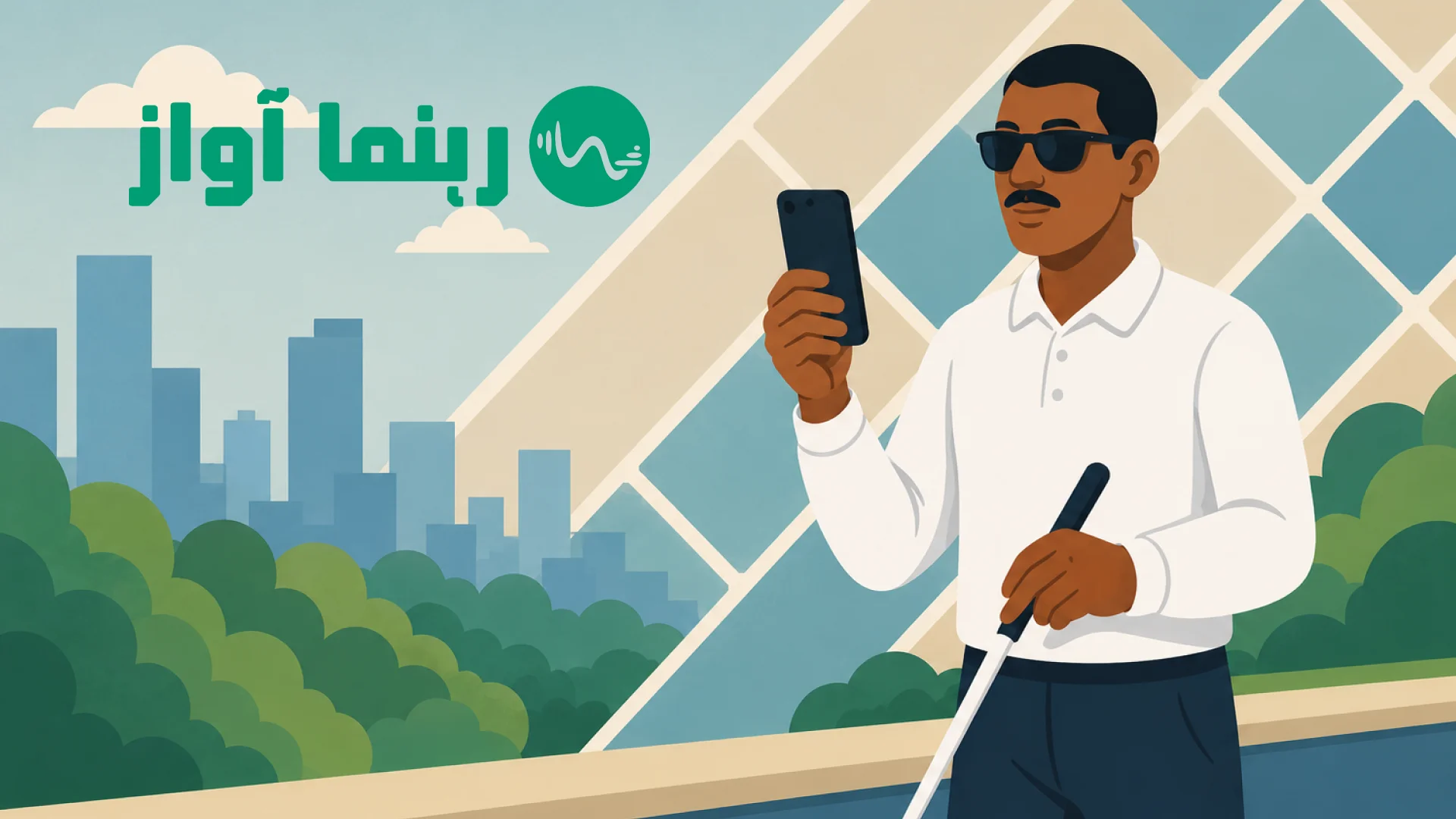
Rehnuma Awaz was developed to improve digital accessibility for Pakistan’s blind and visually impaired users by providing a bilingual AI screen reader with Urdu and English text-to-speech capability. The platform responds to a national accessibility gap where many existing screen readers are English-centric and provide poor Urdu support, making local-language digital content difficult to access independently for users who rely on assistive technology.
The Mandate
The requirement was to create a bilingual screen-reader solution that could support Urdu and English speech output across practical user environments. The platform needed to combine Urdu text processing, pronunciation rules, neural text-to-speech, natural voices, offline support, Windows accessibility through NVDA, Android accessibility through TalkBack, and a user experience suitable for blind and visually impaired users who depend on audio navigation.
The Environment
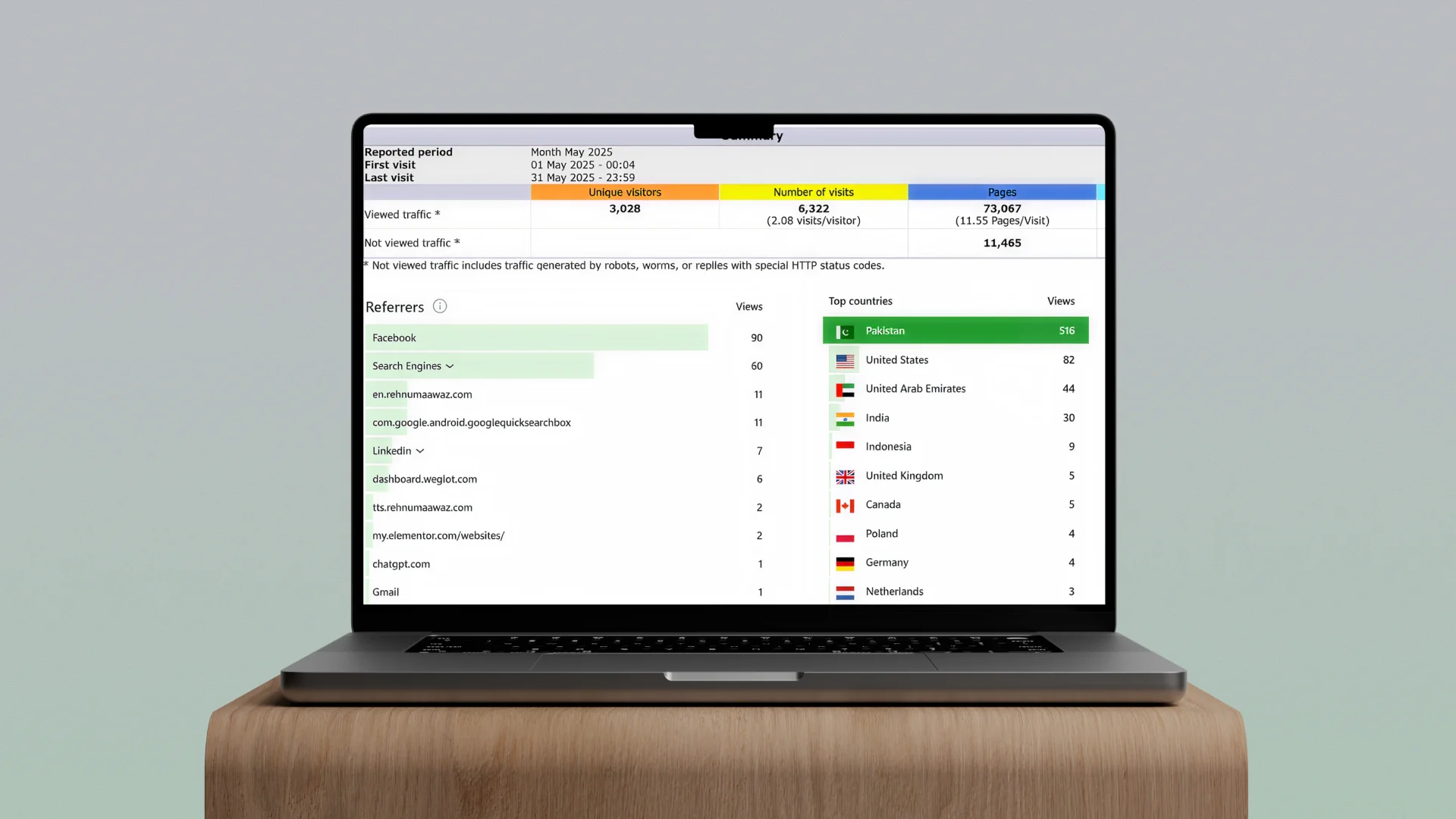
Pakistan has over 2 million blind people and 24 million visually impaired people facing access challenges, while many digital tools remain difficult to use without reliable assistive technology. Existing English-centric screen readers often provide limited Urdu support, creating language barriers and digital exclusion for Urdu-speaking blind users. This made Rehnuma Awaz important not only as a technology product, but as a local-language accessibility intervention designed around real user needs.
Our Role
Centangle worked across the design and development of the bilingual screen-reader experience, combining Urdu language processing, neural text-to-speech, offline voice models, Windows NVDA integration, Android TalkBack support, and multi-platform accessibility workflows. The work focused on making Urdu and English digital content easier to hear, navigate, and understand through natural voice assistive technology.
The Challenge
Blind and visually impaired users depend on screen readers to access digital content, but mainstream tools often perform better for English than for Urdu. This created three connected problems: digital exclusion caused by limited assistive technologies, a language barrier caused by poor Urdu support in English-centric screen readers, and a systemic accessibility gap for Urdu-speaking blind users.
Many blind and visually impaired users faced barriers because reliable assistive technologies for local-language content were limited.
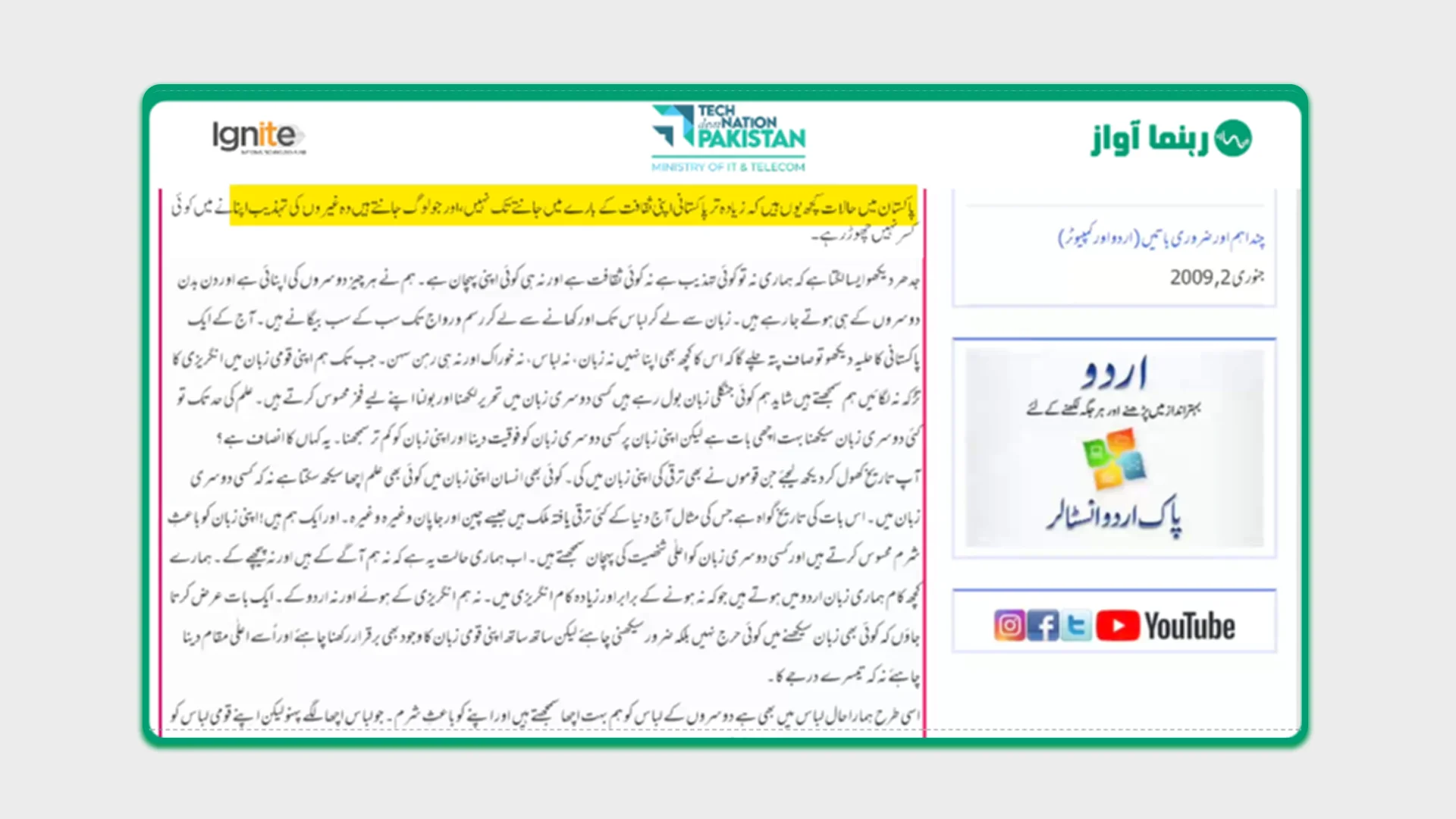
English-centric screen readers provided poor Urdu support, making digital Urdu content harder to access and understand.
Urdu-speaking blind users were underserved by mainstream digital accessibility tools and needed a locally relevant solution.
Users required access across practical environments, including Windows desktop workflows and Android mobile usage.
The Solution
Centangle developed Rehnuma Awaz as Pakistan’s first bilingual AI screen reader, combining Urdu and English text-to-speech support, natural voices, multi-platform access, offline-first voice models, NVDA integration for Windows, and TalkBack support for Android. Built for a country where over 2 million blind people and 24 million visually impaired people face access challenges, the solution enables users to access digital content through clearer local-language audio across desktop and mobile environments.
The System Overview
Accessible Experience
Provides users with spoken Urdu and English content through Windows NVDA and Android TalkBack accessibility environments.
Handles Urdu and English text input, Urdu normalisation, pronunciation rules, language processing, and preparation for speech generation.
Converts processed text into audio using a text to acoustic model to vocoder pipeline.
Supports NVDA add-on integration on Windows and native Android integration with TalkBack support.
Maintains downloadable and versioned voice models for offline text-to-speech use.
Supports model training, pronunciation handling, Urdu speech quality, and language-specific voice performance.
Uses gRPC for local service communication between the speech engine and platform components.
Optimises speech generation for responsive and offline assistive technology use.
FEATURE 01
The platform supports both Urdu and English text-to-speech, helping users access mixed-language digital content more effectively.
FEATURE 02
Rehnuma Awaz provides natural voices to make listening smoother, clearer, and easier for users who depend on audio.
FEATURE 03
The Windows implementation includes an NVDA add-on developed with Python, enabling screen-reader support within a familiar desktop accessibility environment.
FEATURE 04
The Android implementation provides native mobile accessibility through TalkBack support, helping users access content on smartphones.
FEATURE 05
The platform supports offline and versioned voice models, reducing dependency on constant internet access for speech output.
FEATURE 06
The system uses a neural text-to-speech pipeline that moves from text processing to acoustic modelling and vocoder-based audio generation.
The project followed a technology-led accessibility delivery process focused on Urdu language handling, neural speech generation, platform integration, and user-ready assistive access.
PHASE ONE
Understanding the needs of blind and visually impaired users, the limitations of existing screen readers, and the accessibility challenges faced by Urdu-speaking users.
PHASE TWO
Structuring Urdu text normalisation, pronunciation rules, speech dataset requirements, and voice model planning for text-to-speech generation.
PHASE THREE
Developing the neural text-to-speech pipeline using text processing, acoustic modelling, vocoder-based generation, and low-latency optimisation.
PHASE FOUR
Building the Windows NVDA add-on and Android TalkBack-supported experience with offline model support and platform-specific accessibility integration.
PHASE FIVE
Testing speech output, platform behaviour, offline performance, user experience, and deployment readiness across Android and Windows access points.
Rehnuma Awaz made Urdu and English digital content more accessible through bilingual voice support, offline speech models, and screen-reader integration across Windows and Android.
Work With Us
Centangle helps organisations build AI and assistive technologies that improve accessibility, language inclusion, and digital independence.