
Scattered Programme Visibility
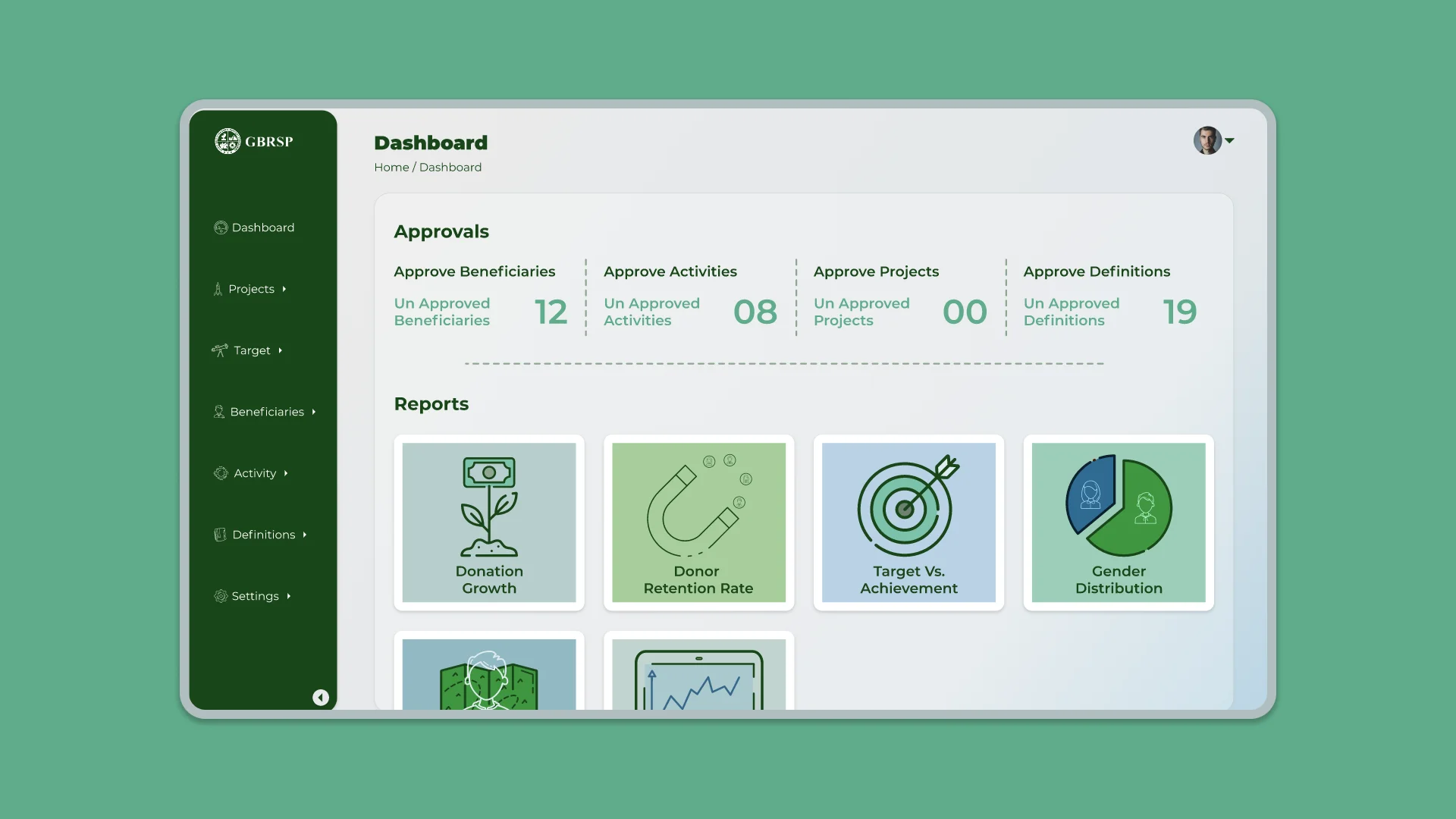
Programme data, activities, beneficiaries, definitions, and approval updates needed to be brought into one structured environment.

Gilgit-Baltistan Rural Support Programme (GBRSP)
Centangle developed an efficient Management Information System for the Gilgit-Baltistan Rural Support Programme to support data-driven decision-making, progress assessment, accountability, and customised reporting. The platform brought approvals, beneficiaries, activities, definitions, dashboards, trend analysis, donor growth, retention reporting, target achievement, and gender-disaggregated insights into one structured MIS.
Project Overview
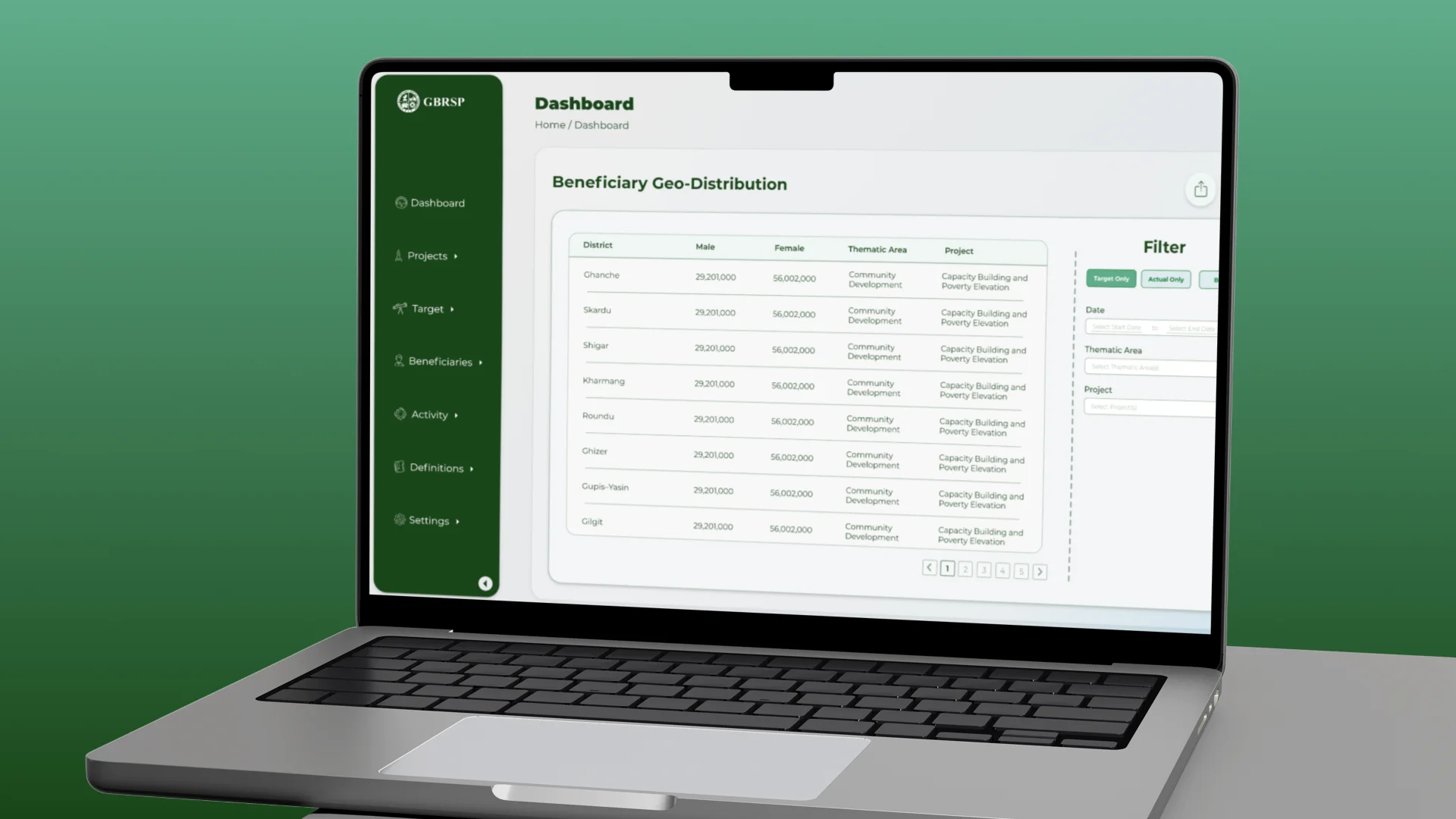
GBRSP needed a Management Information System that could improve organisational efficiency by centralising programme data, supporting approvals, and generating structured reports for better progress assessment and decision-making. The platform needed to support programme teams working across beneficiaries, activities, projects, approvals, targets, donors, and reporting requirements. Centangle developed an MIS that brought approval tracking, dashboard reporting, customised reports, trend analysis, target versus achievement reporting, gender distribution reporting, and donor-related insights into one connected system.
The Mandate
GBRSP required a digital system that could move programme management away from scattered reporting and toward a more structured, approval-led, and data-driven process. The MIS needed to support data storage, review workflows, approval visibility, reporting dashboards, customised reports, and analytical views for programme and management teams. The objective was to create a system that could help teams assess progress, review approvals, generate reports, and use programme data to support better decisions.
The Environment
Development-sector programmes often manage large volumes of information across beneficiaries, activities, targets, approvals, donors, and reporting cycles. When this information is handled through disconnected files, manual formats, and scattered updates, teams may struggle to track progress, review approval status, compare performance, or prepare reports when decisions need to be made. GBRSP needed a centralised MIS that could organise programme information into one reliable environment and make reporting easier for programme teams, management, and decision-makers.
Our Role
Centangle developed the GBRSP MIS as a structured programme reporting and accountability platform. The work included UI/UX design, MIS development, .NET Core development, dashboard and reporting structures, data visualisation, custom report development, website development, API integration, and interactive web design. The final system helped GBRSP manage approvals, review programme progress, generate customised reports, and support data-driven decision-making through a clearer digital structure.
The Challenge
GBRSP’s programme operations required a system that could support reporting, approvals, beneficiary records, activity progress, donor insights, and performance assessment through one structured environment. Without a centralised MIS, programme information can become difficult to manage across separate files, manual updates, scattered approvals, and disconnected reporting formats.
The challenge was to build a structured MIS that could centralise programme data, improve approval visibility, support customised reporting, and help teams assess progress, track achievements, review approvals, and make more data-driven decisions across development-sector operations.
Programme data, activities, beneficiaries, definitions, and approval updates needed to be brought into one structured environment.
Approvals for beneficiaries, activities, projects, and definitions needed clearer visibility and easier tracking.
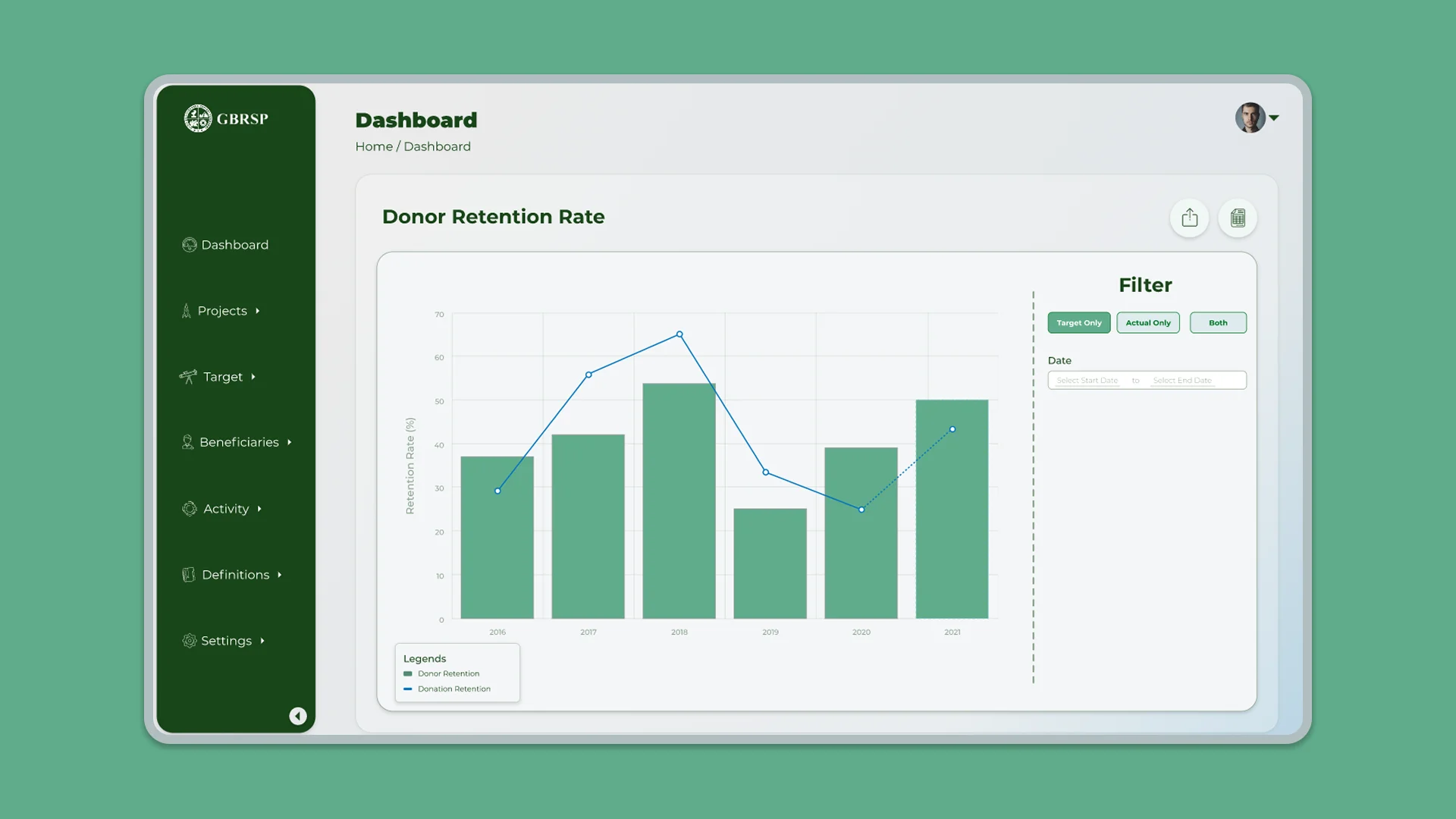
GBRSP needed customised reports covering targets, achievements, trends, donor growth, donor retention, and gender distribution.
Teams needed a more reliable way to assess programme movement, compare performance, and understand operational progress.
The Solution
Centangle developed a connected MIS that brought GBRSP’s approvals, beneficiary records, activity tracking, dashboards, and customised reporting into one structured platform. The system helped teams review progress, track approvals, generate reports, and use programme data more clearly for planning, accountability, and decision-making.
SYSTEM ARCHITECTURE — GBRSP MIS
Review and control workflows
Review and track beneficiary approval status through a central dashboard.
Centralised beneficiary information for easier programme visibility.
Structured activity records to support progress tracking and reporting.
Project information organised for review, reporting, and management oversight.
Generate reports for programme, management, donor, and operational needs.
Review programme patterns and performance movement over time.
Compare planned targets with actual programme performance.
View gender distribution, donor growth, and donor retention through structured reporting.
FEATURE 01
Beneficiary, activity, project, and definition approvals became visible through a clearer dashboard structure.
FEATURE 02
Programme records were centralised so teams could access information from one structured MIS environment.
FEATURE 03
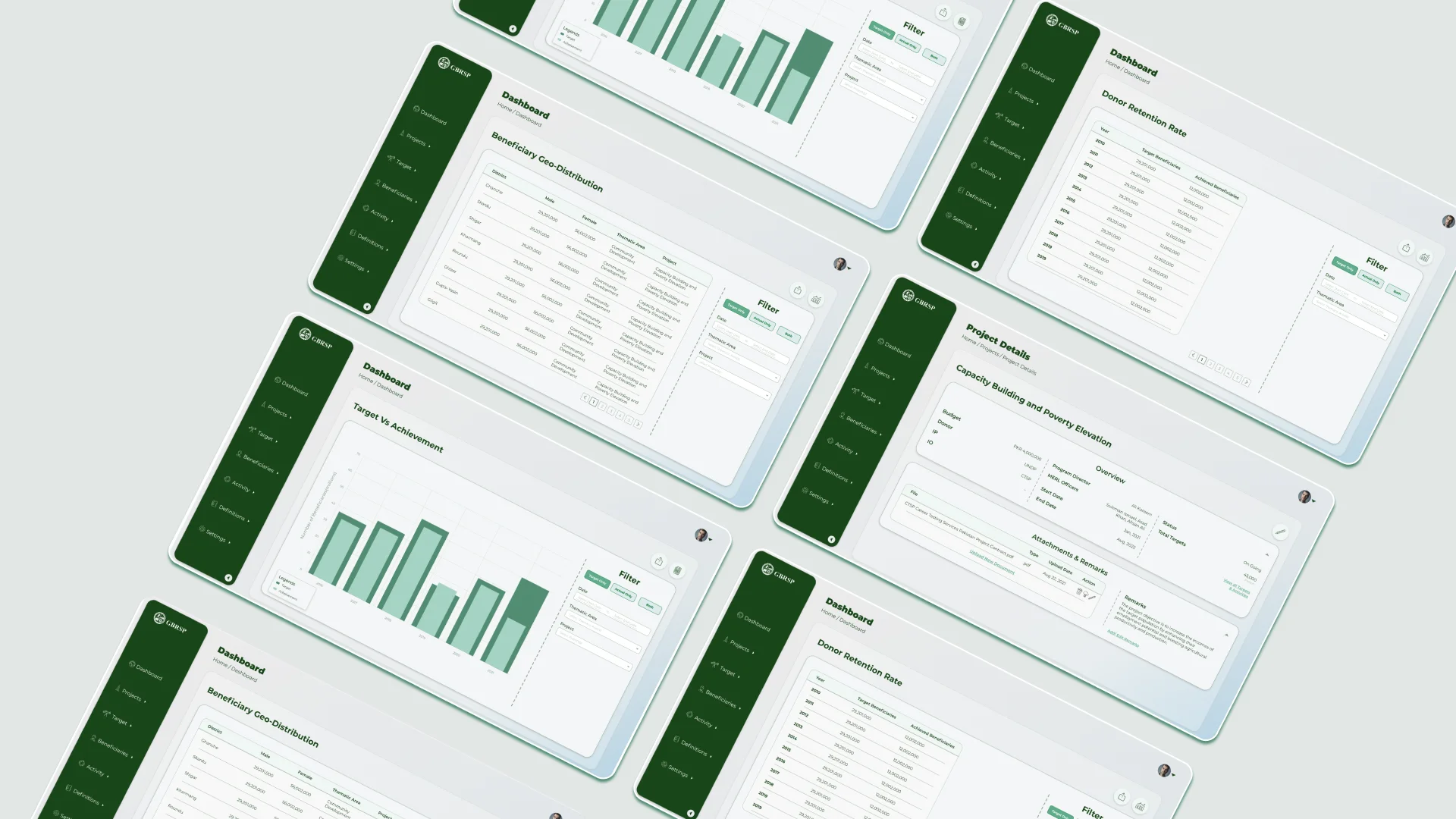
Reports were structured to support different management, donor, and programme review requirements.
FEATURE 04
The system helped teams compare targets with achievements and assess programme movement over time.
FEATURE 05
Donor growth, donor retention, and gender distribution reporting became easier to review and present.
FEATURE 06
The MIS converted programme data into clearer dashboard views that could support data-driven decisions.
The GBRSP MIS was delivered through a structured process focused on understanding programme data, approval workflows, reporting requirements, dashboard needs, and decision-support outputs.
PHASE ONE
Understanding GBRSP’s programme management needs, reporting expectations, approval requirements, beneficiary records, activity data, and decision-making priorities.
PHASE TWO
Structuring the system around approvals, programme records, activities, projects, definitions, reporting flows, and management views.
PHASE THREE
Designing dashboards and report views for approvals, trends, target versus achievement, donor growth, donor retention, and gender distribution.
PHASE FOUR
Developing the MIS with UI/UX design, .NET Core development, API integration, interactive web design, data visualisation, and custom reporting functionality.
PHASE FIVE
Reviewing system functionality, validating reporting outputs, refining dashboard views, and preparing the platform for operational use.
The GBRSP MIS helped organise programme approvals, reporting, beneficiary information, activity progress, and analytical views into one structured system. By bringing these areas together, the platform supported better progress assessment, stronger accountability, and easier access to information for data-driven programme decisions.
Work With Us
Programme data becomes more useful when approvals, beneficiaries, activities, targets, reports, and dashboards are connected through one clear system. Centangle helps development-sector organisations build MIS platforms that improve reporting control, strengthen accountability, and support better data-driven decision-making.