
Fragmented Digital Requirements
Enterprise operations, MEL, CRM, knowledge management, and programme-management needs were being considered across separate functional areas.

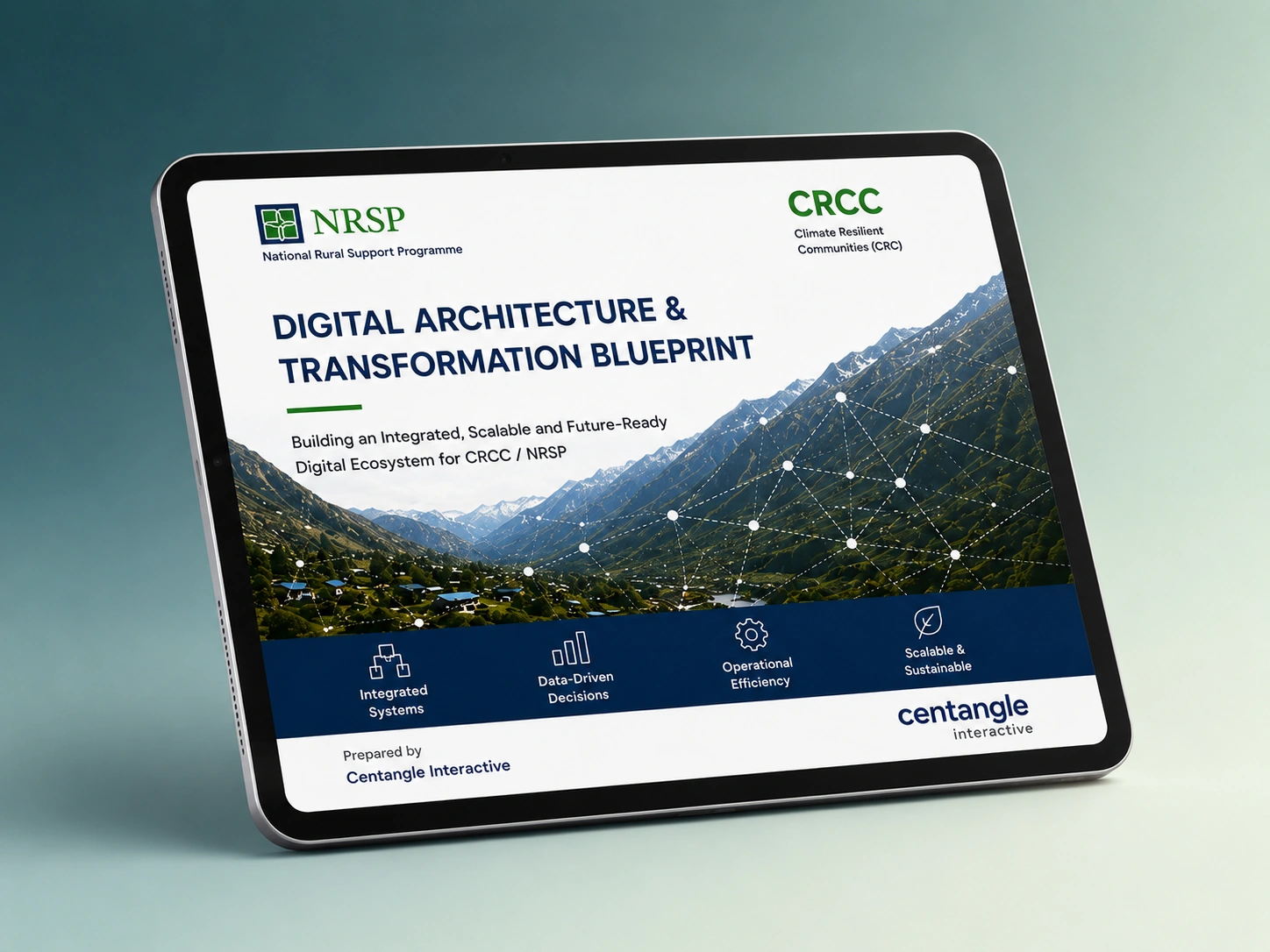
CRCC / NRSP Digital Architecture and Transformation Blueprint
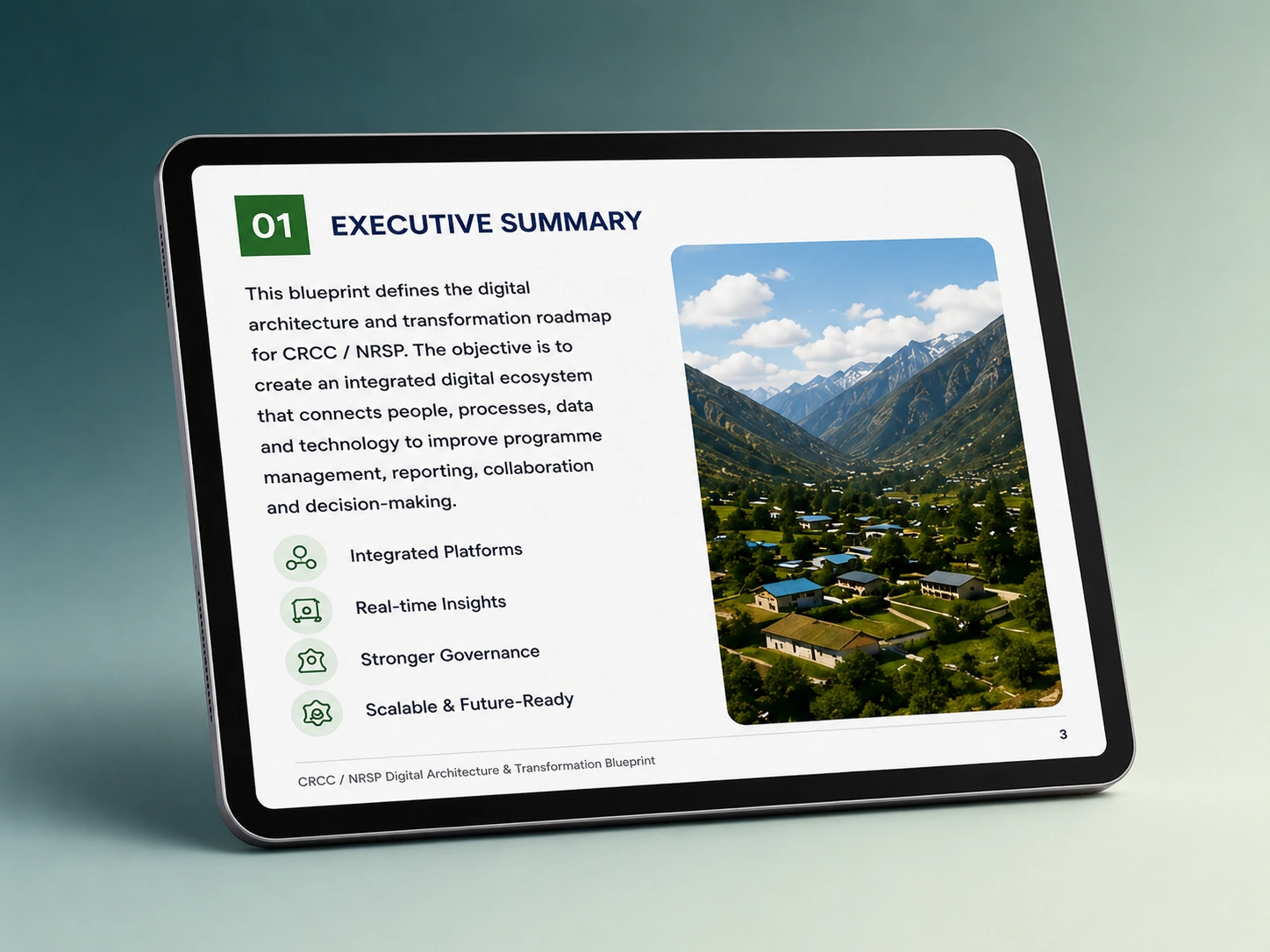
Centangle worked with CRCC and NRSP under a Green Climate Fund programme in Pakistan to assess the organisation’s digital environment and define a structured architecture for future transformation. Through seven discovery sessions, the engagement examined back-office ERP requirements, MEL systems, stakeholder management, knowledge management, programme tools, data flows, governance needs, and deployment priorities before implementation decisions were made.
Project Overview
CRCC and NRSP required a clear digital architecture that could connect programme operations, back-office systems, monitoring and evaluation, stakeholder engagement, knowledge management, and programme oversight. Centangle conducted a structured advisory engagement to understand the current environment, identify gaps and dependencies, assess suitable platforms, and translate the findings into an inception report and deployment plan for future implementation.
The Mandate
The requirement was to assess how the programme’s operational, administrative, reporting, knowledge, and stakeholder-management needs should be supported digitally. The engagement needed to compare ERP options, define the role of MEL, CRM, knowledge management, and programme management systems, identify integration requirements, and create a phased direction that could guide future procurement, configuration, and implementation.
The Environment
Development programmes often involve financial administration, programme teams, partners, field operations, monitoring specialists, management stakeholders, and donor-reporting requirements. When these functions depend on disconnected tools or separately managed information, duplication increases and leadership visibility weakens. CRCC and NRSP needed an architecture that treated these requirements as one connected environment rather than a collection of isolated software projects.
Our Role
Centangle led the advisory and architecture process through seven discovery sessions with relevant stakeholders. The work included reviewing existing requirements, mapping operational and programme workflows, identifying digital gaps, evaluating ERP options including Odoo, Oracle, and ERPNext, defining the target relationship between enterprise and programme systems, and preparing a structured inception report and deployment plan.
The Challenge
The programme required capabilities across back-office operations, monitoring and learning, stakeholder management, programme coordination, knowledge sharing, and reporting. Addressing each requirement through a separate procurement or tool could have created a fragmented environment with duplicated records, weak integration, and unclear system ownership.
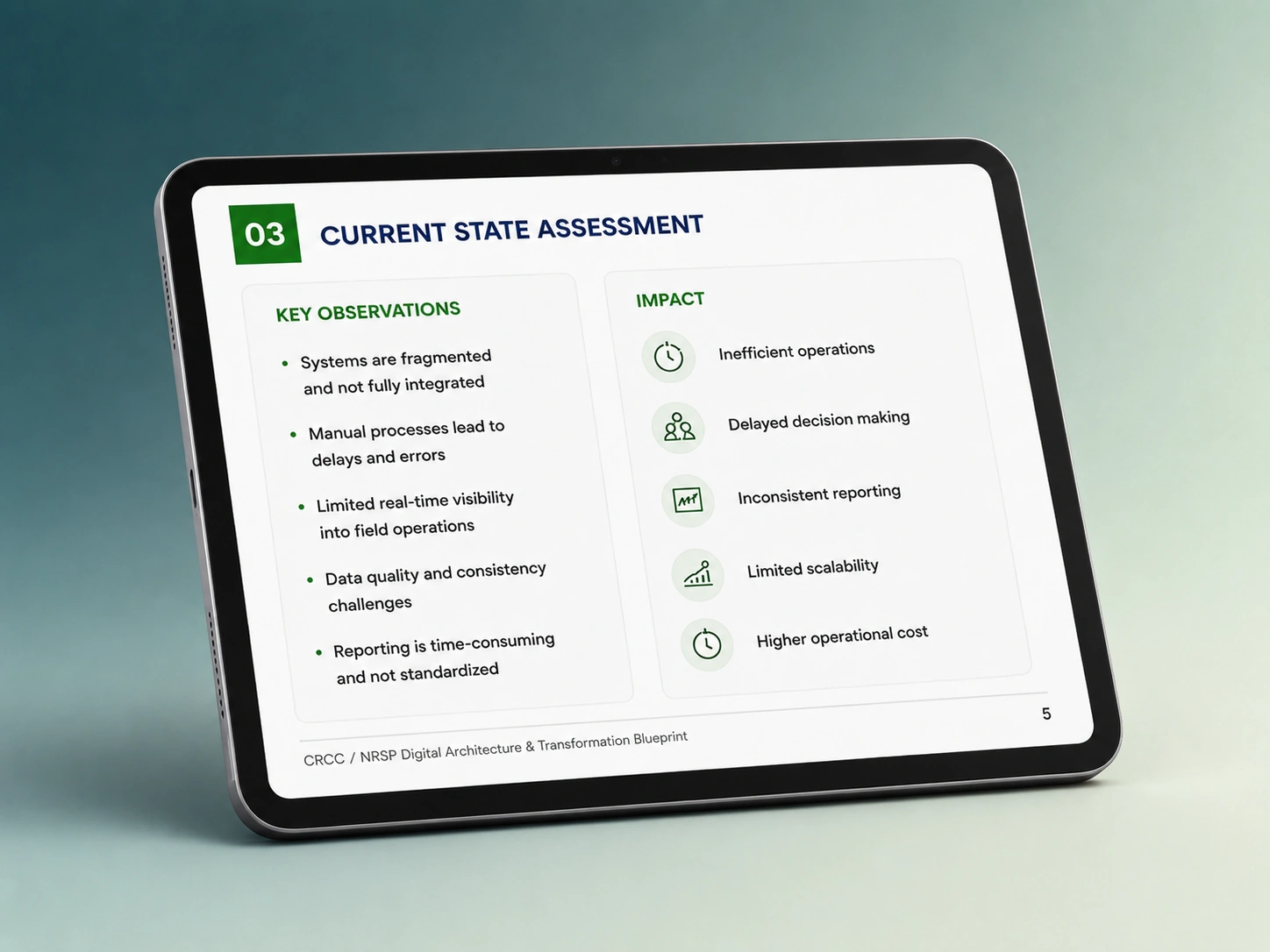
The key challenge was therefore not simply choosing software. It was defining which capabilities belonged within the ERP, which required specialist systems, how information should move between them, what governance controls were needed, and in what order the different components should be introduced.
Enterprise operations, MEL, CRM, knowledge management, and programme-management needs were being considered across separate functional areas.
The organisation needed to assess different commercial and open-source ERP options against operational requirements, cost, scalability, and implementation needs.
The future responsibilities of the ERP, MEL platform, CRM, knowledge repository, and programme tools needed to be clearly separated and connected.
Without a phased deployment plan, multiple systems could have been procured or configured without the architecture required to make them work together.
The Solution
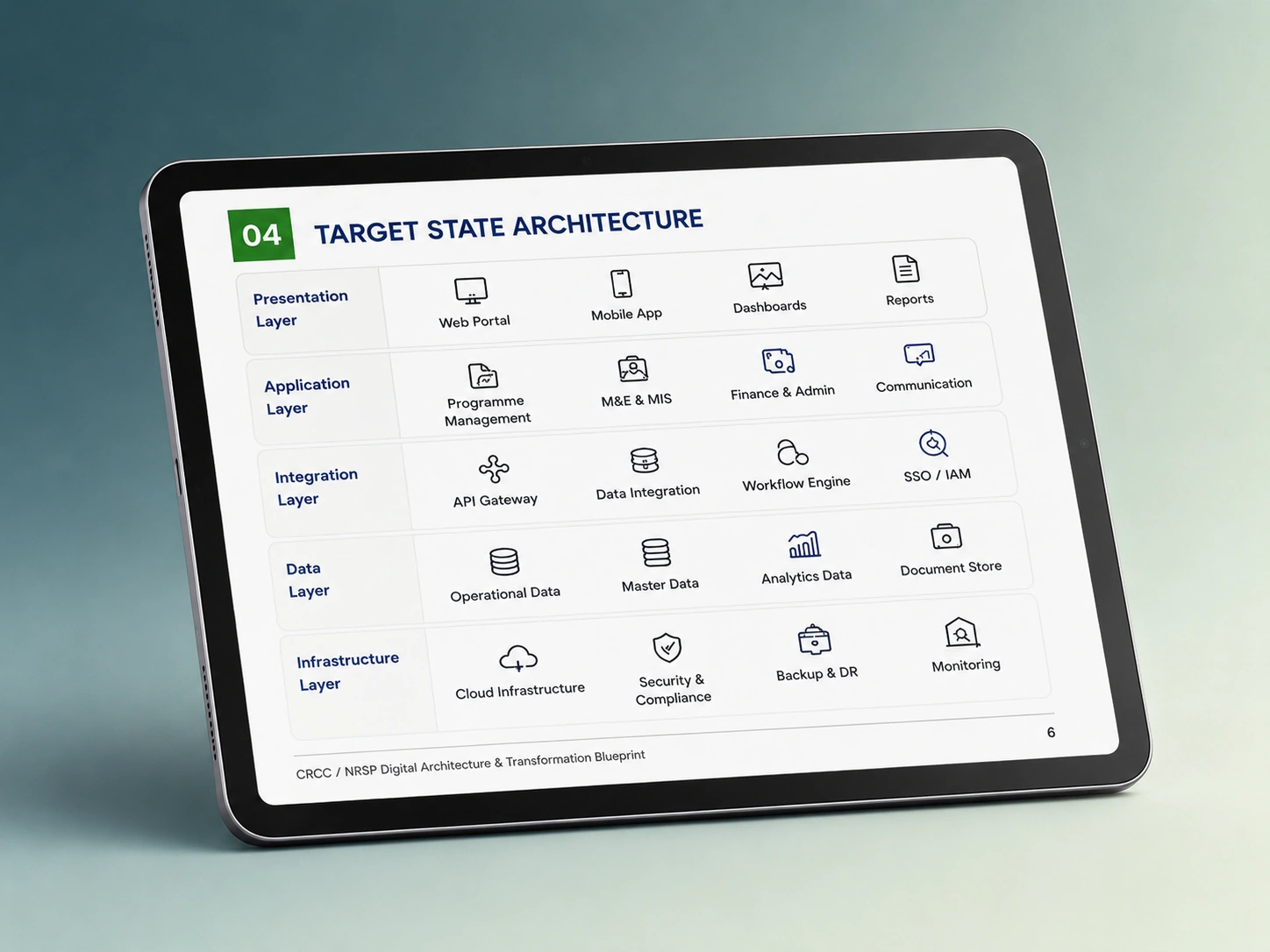
Centangle developed a digital architecture that positioned the ERP, MEL system, CRM, knowledge management, and programme-management tools as connected components of one wider operating environment. The advisory process clarified the purpose of each system, how information should move between platforms, which capabilities required central governance, and what needed to be delivered first. The final inception report and deployment plan gave CRCC and NRSP a structured foundation for moving from assessment into procurement and implementation.
System Architecture: CRCC / NRSP Programme Environment
Digital Workspace
Provides programme, operations, management, monitoring, and administrative users with access to relevant systems, workflows, reports, and information.
Supports the structured management of core back-office and organisational processes through the selected ERP platform.
Supports programme monitoring, evaluation, learning, implementation coordination, activity management, and performance visibility.
Organises stakeholder relationships, communication records, institutional knowledge, programme documents, and learning resources.
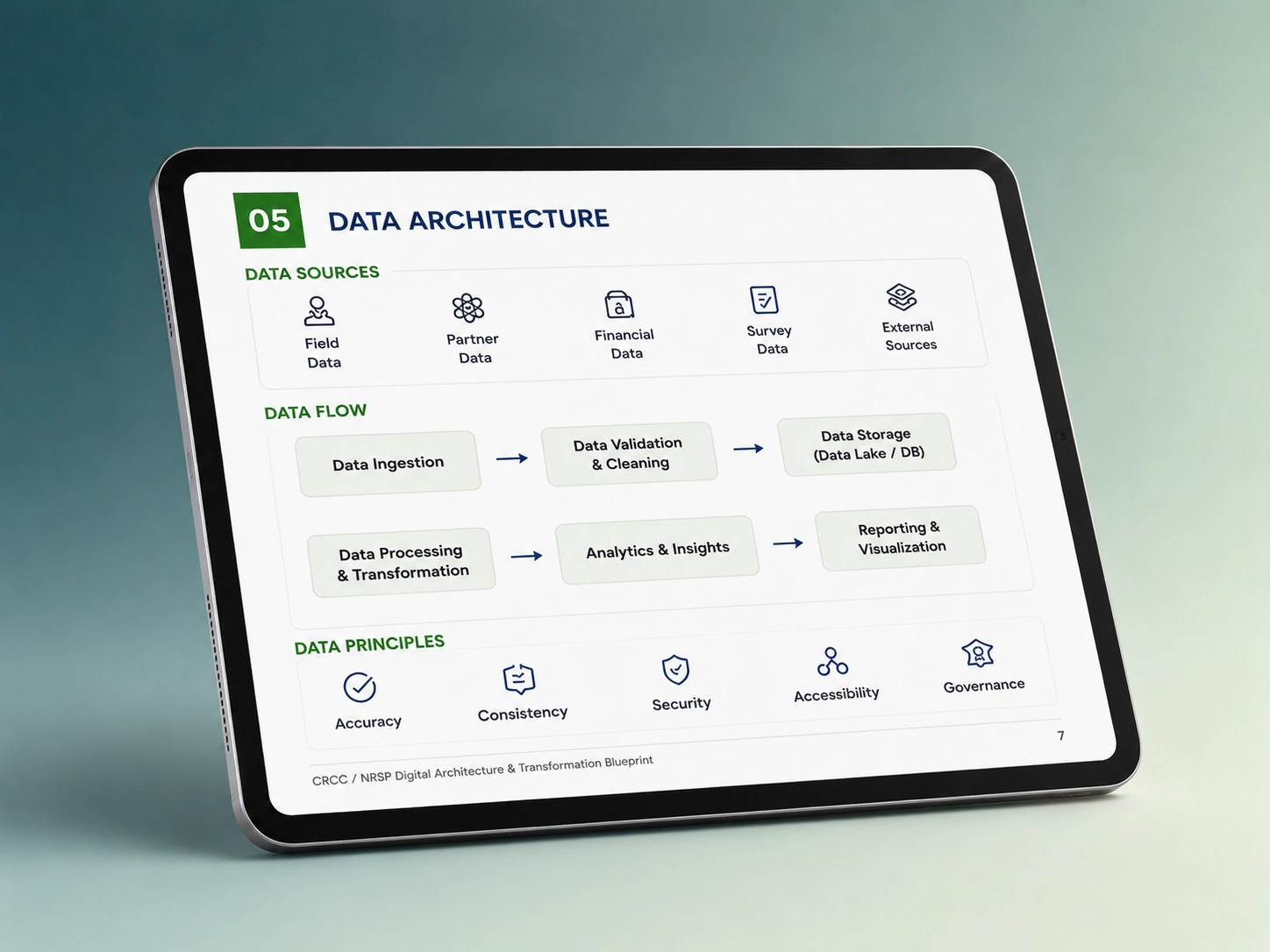
Defines how enterprise, programme, stakeholder, and reporting records should be structured across the digital environment.
Establishes how ERP, MEL, CRM, knowledge, and programme-management systems should exchange information.
Supports consolidated programme, operational, management, and donor-reporting views across connected systems.
Defines ownership, user access, data responsibilities, documentation standards, and system-level control requirements.
FEATURE 01
The engagement established a clearer understanding of the existing operating environment, stakeholder needs, workflows, reporting responsibilities, and digital requirements.
FEATURE 02
Odoo, Oracle 12c and 19c, and ERPNext were reviewed as potential options against the organisation’s requirements and future architecture.
FEATURE 03
A structured model defined how enterprise operations, MEL, CRM, knowledge management, programme tools, data, and reporting should work together.
FEATURE 04
The advisory clarified which functions should sit within the ERP and which should be supported through specialised programme or stakeholder systems.
FEATURE 05
The architecture identified where information needed to move across systems and where shared records or consolidated reporting would be required.
FEATURE 06
The final direction translated the architecture into phased implementation priorities, dependencies, and future deployment considerations.
The CRCC / NRSP engagement followed a consulting-led process that began with stakeholder discovery and moved through current-state analysis, platform assessment, target architecture, and implementation planning.
PHASE ONE
Seven structured sessions were conducted to understand operational requirements, programme workflows, existing tools, reporting needs, and stakeholder expectations.
PHASE TWO
The findings were consolidated to identify fragmentation, capability gaps, integration needs, system overlaps, and areas requiring greater governance.
PHASE THREE
Odoo, Oracle, and ERPNext were assessed against relevant operational, technical, scalability, and implementation considerations.
PHASE FOUR
The future digital environment was structured across enterprise operations, MEL, CRM, knowledge management, programme management, data, integration, and reporting.
PHASE FIVE
The findings and recommendations were translated into a structured inception report and phased deployment plan.
The engagement gave CRCC and NRSP a consolidated view of the digital environment before procurement or implementation began. Seven discovery sessions translated stakeholder needs into a target architecture, platform assessment, integration direction, and phased deployment plan.
WORK WITH US
Centangle helps organisations understand their current environment, evaluate technology options, define a connected target architecture, and create a disciplined path towards implementation.