


MEAL SystemManagement Information SystemProject MonitoringBeneficiary TrackingDashboard ReportingReact

SIF MEAL MIS

Secours Islamique France (SIF)

Centangle developed a comprehensive Monitoring, Evaluation, Accountability, and Learning system for Secours Islamique France to streamline project planning, beneficiary tracking, reporting, complaints management, and real-time decision visibility.

12M+
Project records digitised across all programmes, providing a centralised view of activities and outputs.
240
Facilities connected and integrated within the MEAL system for consistent monitoring.
78%
Faster participant onboarding and data validation through streamlined workflows.
SIF MEAL MIS

PROJECT OVERVIEW

Transforming Project Monitoring with a Centralised MEAL System

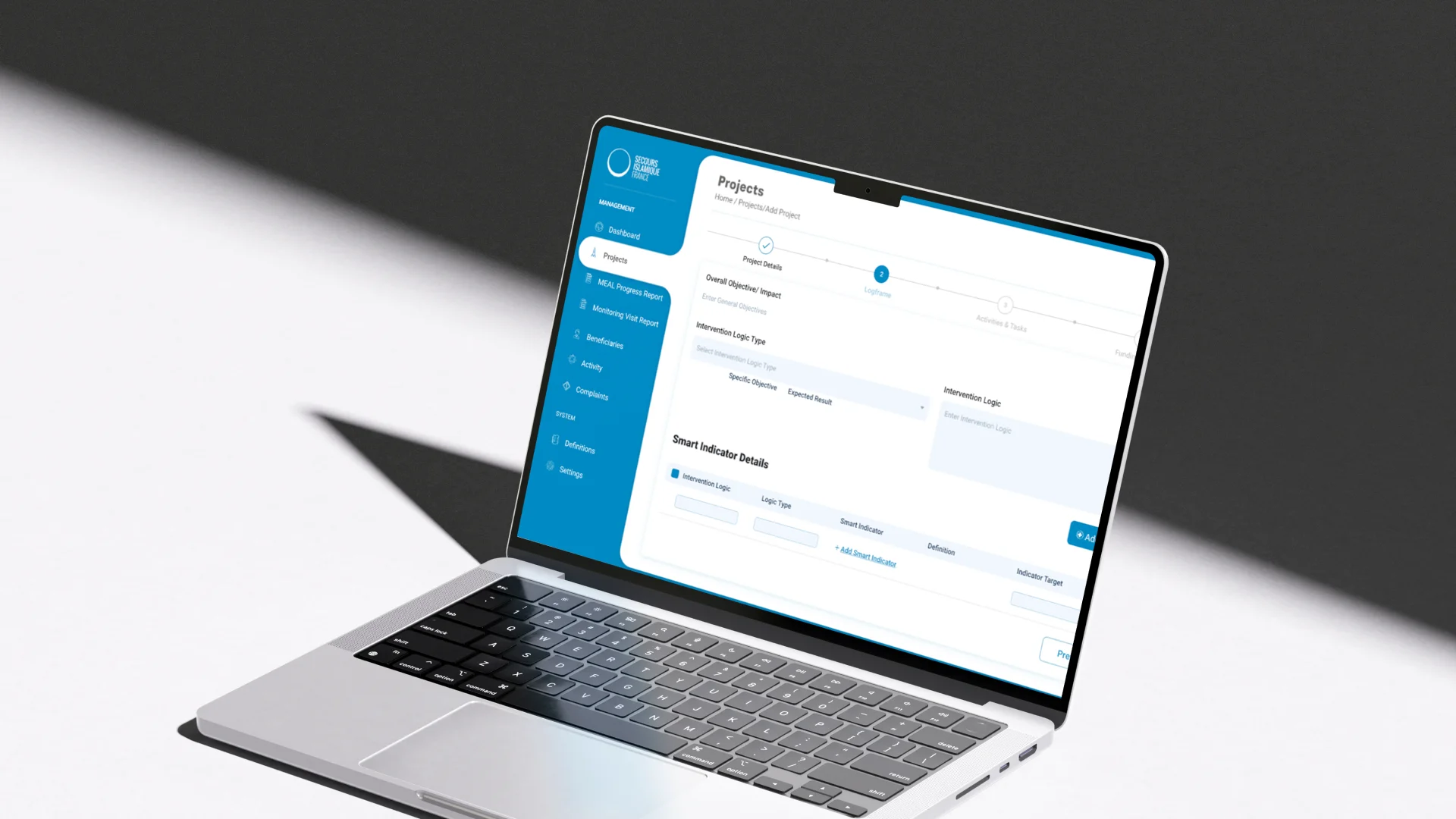
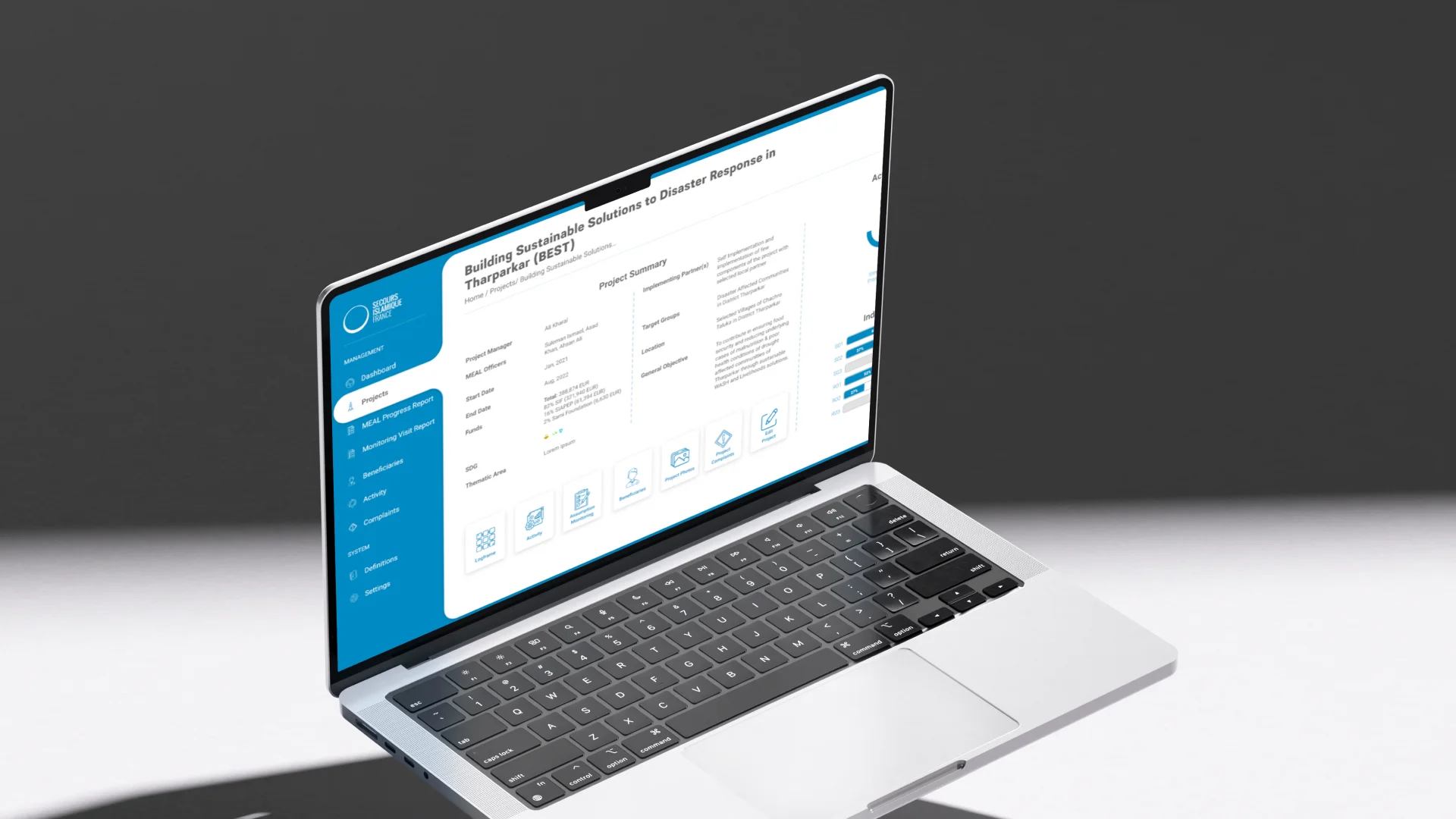
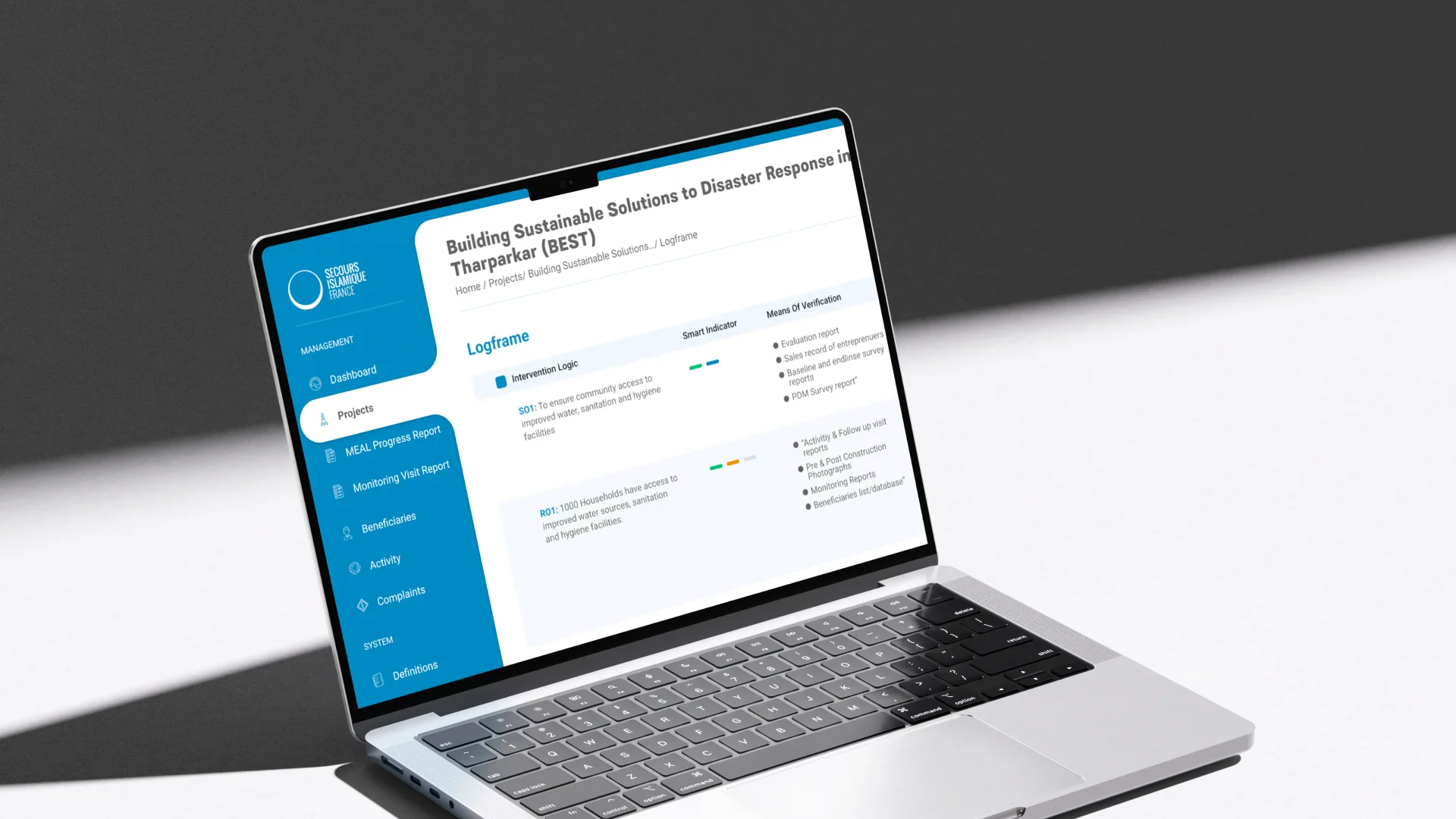
The SIF MEAL Management Information System is designed to help programme teams, project managers, and leadership monitor activities, track beneficiaries, manage complaints, validate assumptions, and report on performance efficiently. The platform integrates project planning, logframe management, beneficiary records, complaints management, dashboards, and reporting workflows into a single structured system. By replacing fragmented files, spreadsheets, and manual processes, the platform provides teams with a clearer, more reliable environment for monitoring and evidence-based decision-making.

Transforming Project Monitoring with a Centralised MEAL System
  • The Mandate

    Centralising Project Planning and Monitoring

    The requirement was to create a platform capable of supporting multi-project MEAL operations, automating data validation, centralising beneficiary and project records, and providing real-time dashboards for programme oversight. SIF needed a system that could make monitoring, evaluation, accountability, and learning processes more consistent, reduce manual effort, and provide leadership with actionable insights across all projects.

  • The Environment

    Replacing Fragmented Manual Workflows

    Before the digital platform, project data was stored in separate files and spreadsheets, often requiring manual aggregation for management review. This created visibility gaps, slowed the assessment of assumptions and indicators, and made cross-project comparison difficult. The SIF MIS was designed to centralise project records, integrate monitoring and reporting workflows, provide structured dashboards, and ensure data flows efficiently from field teams to programme management.

  • Our Role

    Delivering a Structured, Evidence-Based MEAL Platform

    Centangle developed the SIF MEAL Management Information System as a connected digital platform combining project planning, beneficiary tracking, logframe management, complaint workflows, dashboards, and reporting modules. The work focused on transforming MEAL processes into a structured, evidence-backed workflow, enabling field teams, programme managers, and leadership to monitor project performance, validate data, track beneficiaries, and access real-time reporting efficiently.

The Challenge

SIF needed a structured system to centralise project monitoring and accountability

Secours Islamique France manages multiple humanitarian and development projects with complex Monitoring, Evaluation, Accountability, and Learning (MEAL) workflows. Project data, beneficiary records, activities, assumptions, complaints, and reporting were often scattered across separate files, spreadsheets, and reporting formats. This made it challenging to review progress, track outcomes, assess beneficiaries, and provide management with a clear view of overall programme performance.

The challenge was to create a digital platform that could consolidate all MEAL processes into one structured, transparent, and user-friendly system. The goal was to improve operational visibility, simplify reporting, strengthen accountability, and support timely, evidence-based decision-making across multiple projects and locations.

SIF needed a structured system to centralise project monitoring and accountability
  • Scattered Project Data

    Project planning, monitoring, beneficiary records, activities, and reporting information were spread across separate files, teams, and formats. This made it difficult to consolidate insights and track overall programme performance.

  • Complex MEAL Workflows

    The platform needed to support logframes, assumptions, indicators, monitoring visits, and reporting requirements across multiple projects, ensuring structured and consistent MEAL processes.

  • Accountability & Complaints Tracking

    SIF needed a clear and structured way to record, track, and follow up on complaints and accountability-related activities to improve operational transparency.

  • Limited Real-Time Visibility

    Top management required dashboards and reporting views that provided live project insights, enabling faster, more informed decision-making.

THE SOLUTION

A tailored MEAL MIS built for structured project monitoring and accountability

Centangle designed and developed a structured Management Information System for Secours Islamique France to automate MEAL workflows, consolidate project planning, beneficiary records, complaints, logframe monitoring, and reporting dashboards into one connected platform.

SYSTEM ARCHITECTURE — SIF MEAL MIS

  1. Presentation Layer

    Field & Programme Team Interfaces

    • Data Capture & Monitoring

      Enables real-time entry of project activities, assumption monitoring, and complaints, supporting structured workflow and operational transparency.

  2. APPLICATION LAYER

    • AI-Assisted Review

      Pre-scores and flags data entries to prioritise review and ensure consistency.

    • District & Regional Admin Console

      Provides administrators with dashboards for validating submissions, tracking progress, and managing approvals.

    • Role-Based Access Controls

      Ensures secure, structured access for field staff, programme officers, and management teams.

  3. DATA & INTEGRATION LAYER

    • Reporting & Analytics Engine

      Real-time dashboards for monitoring project performance, field activity, and indicator tracking.

    • Governance & Audit Logs

      Tracks all user activity, approvals, and changes for accountability.

    • Performance Insights

      Provides leadership with evidence-based insights for informed decision-making.

    • Data Integration & Quality Checks

      Ensures cross-project data consistency, deduplication, and integration with external reference data where required.

  • FEATURE 01

    Unified Beneficiary Registry

    Every beneficiary and project participant across SIF programmes is captured in one verified system, eliminating duplicates and giving programme teams a complete cross-project view for better oversight.

  • FEATURE 02

    AI-Assisted Project Routing

    Machine learning models classify and prioritise submissions, guiding SIF teams to focus on critical project activities while reducing manual review effort, without removing human oversight.

  • FEATURE 03

    Real-Time Programme Dashboards

    Dashboards provide live monitoring of project activities, performance metrics, and indicator tracking across all SIF programmes, replacing delayed manual reporting.

  • FEATURE 04

    Role-Based Governance Controls

    Granular access management across multiple SIF roles ensures data entry, approvals, and reporting follow organisational governance, maintaining transparency and accountability.

  • FEATURE 05

    Identity Verification Integration

    Beneficiary identities are verified against national databases, ensuring accurate participant records, preventing duplication, and improving the integrity of SIF programmes.

  • FEATURE 06

    Mobile-First Field Application

    A lightweight mobile interface allows SIF field teams to capture project data, update reports, and track activities efficiently, even in low-connectivity or remote areas.

HOW WE DELIVERED IT

Structured delivery from MEAL understanding to system implementation

The SIF MEAL system was delivered through a research-led, phased approach designed to understand workflows, gather requirements, structure the platform, and ensure a seamless rollout.

  1. 01

    PHASE ONE

    User and Stakeholder Understanding

    Workshops and interviews were conducted with field teams, programme managers, and leadership to map workflows, reporting requirements, and accountability processes.

    • User interviews, workflow mapping, stakeholder requirements, organisational alignment
  2. 02

    PHASE TWO

    Workflow and System Architecture

    The system architecture and workflows were structured to integrate project planning, logframes, assumptions, activities, indicators, monitoring visits, and reporting into one cohesive platform.

    • Platform architecture, workflow design, data model, reporting logic
  3. 03

    PHASE THREE

    Dashboard and Reporting Design

    High-fidelity dashboards were designed for monitoring project progress, beneficiary coverage, complaints, and overall programme performance.

    • Dashboard layouts, activity tracking views, logframe and assumption reporting
  4. 04

    PHASE FOUR

    Platform Development

    The platform was built using React for front-end dashboards, .NET backend, database management, and integration of workflows for project and beneficiary tracking.

    • Web and mobile applications, centralised database, dashboards, workflow integrations
  5. 05

    PHASE FIVE

    Testing, Refinement, and Support

    The platform underwent rigorous QA, functional testing, workflow validation, and iterative refinements. Training and operational support were provided to ensure smooth adoption.

    • Functional testing, workflow validation, user training, maintenance and support guidance
Measured Impact

What changed after the platform went live

All metrics are measured against the pre-platform baseline established during the diagnostic phase

12M+
Teams can now review project progress, monitor achievements, and track outputs from a single structured platform.
Project records digitised across all programmes, providing a centralised view of activities and outputs.
240
This integration ensures uniform data collection, reporting, and oversight across all sites.
Facilities connected and integrated within the MEAL system for consistent monitoring.
78%
The system automates key steps, reducing manual effort and improving data quality for programme teams.
Faster participant onboarding and data validation through streamlined workflows.

Before

  • Project and participant records were fragmented across multiple files and reporting formats.
  • Progress, achievements, and outputs were harder to track and validate in real time.
  • Beneficiary information was scattered, making coverage and distribution monitoring difficult.
  • Complaints and follow-ups lacked a structured workflow for accountability and oversight.

After

  • All project records are digitised and centrally accessible.
  • Facilities are connected and integrated within the MEAL system for consistent monitoring.
  • Participant onboarding and data validation are faster and more reliable.
  • Dashboards provide live insights on project progress, beneficiary coverage, complaints, and outputs, supporting quicker, data-driven decision-making.

Final CTA

Need a stronger system for project monitoring and accountability?

Centangle helps organisations build MEAL systems that improve programme oversight, reduce manual effort, strengthen reporting, and support faster, evidence-based decision-making.