




4min read
AI is increasingly moving beyond generating information and into real operational workflows. It can score applications, flag unusual activity, prioritise cases, recommend next steps and trigger actions across connected systems. As organisations move from experimenting with AI to using it in daily work, one question becomes more important: where should AI stop?
The answer is not to place a human approval step after everything AI does. That can turn oversight into another repetitive task. But allowing AI to move from recommendation to action without clear boundaries creates a different problem. The organisation may no longer know where automation ends and accountable decision-making begins. That boundary needs to be designed into the workflow.
AI Can Support a Decision Without Owning It
Many useful AI applications do not require AI to become the final decision-maker. Consider a commercial investigation involving hundreds of transactions, documents or cases. AI could help identify unusual patterns, organise supporting information, rank cases by priority and summarise what may need attention. This reduces repetitive review and helps teams focus on the cases that deserve closer attention.
But flagging a case is different from deciding what happens to it. An investigator may still need to determine whether the evidence is sufficient, whether an exception has a reasonable explanation, whether more information is required and whether the case should be escalated. The important distinction is not only what the system can do, but what it should be authorised to do on its own.
Human Review Needs a Clear Trigger
Human review becomes less useful when it is added everywhere. If employees are repeatedly asked to approve routine AI outputs, the approval step may remain in the workflow while the quality of attention behind it weakens.
A stronger approach is to define the conditions that actually require human judgement. Uncertainty is one trigger, but it should not be the only one. A case may need review because information conflicts, it falls outside normal business rules, the proposed action affects people or money, or the outcome would be difficult to reverse.
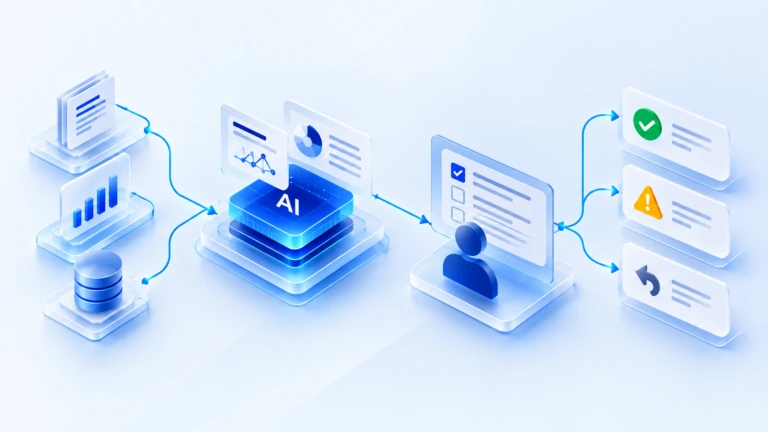
This allows the same workflow to follow different routes. Routine and well-defined cases may continue automatically. An unusual case may be sent for review. A high-impact action may require approval. Something outside the system’s expected conditions may need to stop and be escalated. Human review becomes more meaningful when the workflow knows why it is asking for it.
Review Only Matters If People Can Change the Outcome
Adding an approval button does not automatically create meaningful oversight. The person reviewing an AI recommendation needs enough context and enough authority to make an independent decision.
If AI flags a case, the reviewer should be able to understand what triggered the flag, inspect the relevant information, correct an error, reject the recommendation or escalate it when more expertise is required. The system should support judgement rather than simply ask someone to confirm what AI has already suggested.
The same principle applies after the decision. A strong workflow should retain what the AI recommended, what the reviewer decided, who made the decision and whether the original recommendation was changed or escalated. This creates accountability, but it can also improve the system. If people repeatedly override the same type of recommendation, there may be a deeper issue in the data, model, business rule or workflow design.
AI Readiness Includes Knowing Where Automation Ends
Centangle’s work on the ASER monitoring platform provides a practical example of this boundary. AI-assisted scoring helps prioritise validation while human decision authority remains within the process. Administrators manage approvals through defined workflows, and system activity and approvals can be tracked for accountability.
The important part is not simply that AI exists in the platform. It is where AI sits in the decision process. It helps focus attention without removing the people responsible for the final decision.
The same thinking should happen before any AI workflow is deployed. Organisations need to decide what AI can recommend, what it can execute, what requires review, what needs formal approval and what should be escalated. They also need to define who owns the final decision and what information that person needs before making it.
The goal is not to keep a person inside every AI process. It is to design the process so that automation can move quickly where it should, while human judgement remains available where it matters.
The strongest AI workflows are clear about where automation ends and human responsibility begins.
Key Takeaways
- AI Can Support a Decision Without Owning It
- Human Review Needs a Clear Trigger
- Review Only Matters If People Can Change the Outcome
- AI Readiness Includes Knowing Where Automation Ends
Final Thoughts
Lasting transformation comes from clear goals, honest process design, and technology chosen to support how your teams actually work—not the other way around. If this article resonated, we can help you translate insight into a practical roadmap.