



3min read
Digital access is not equal if users cannot read, navigate, or understand the information in the format they need.
For visually impaired users, many digital platforms remain difficult because they are designed around screens, visuals, menus, and written content that assume everyone can interact in the same way.
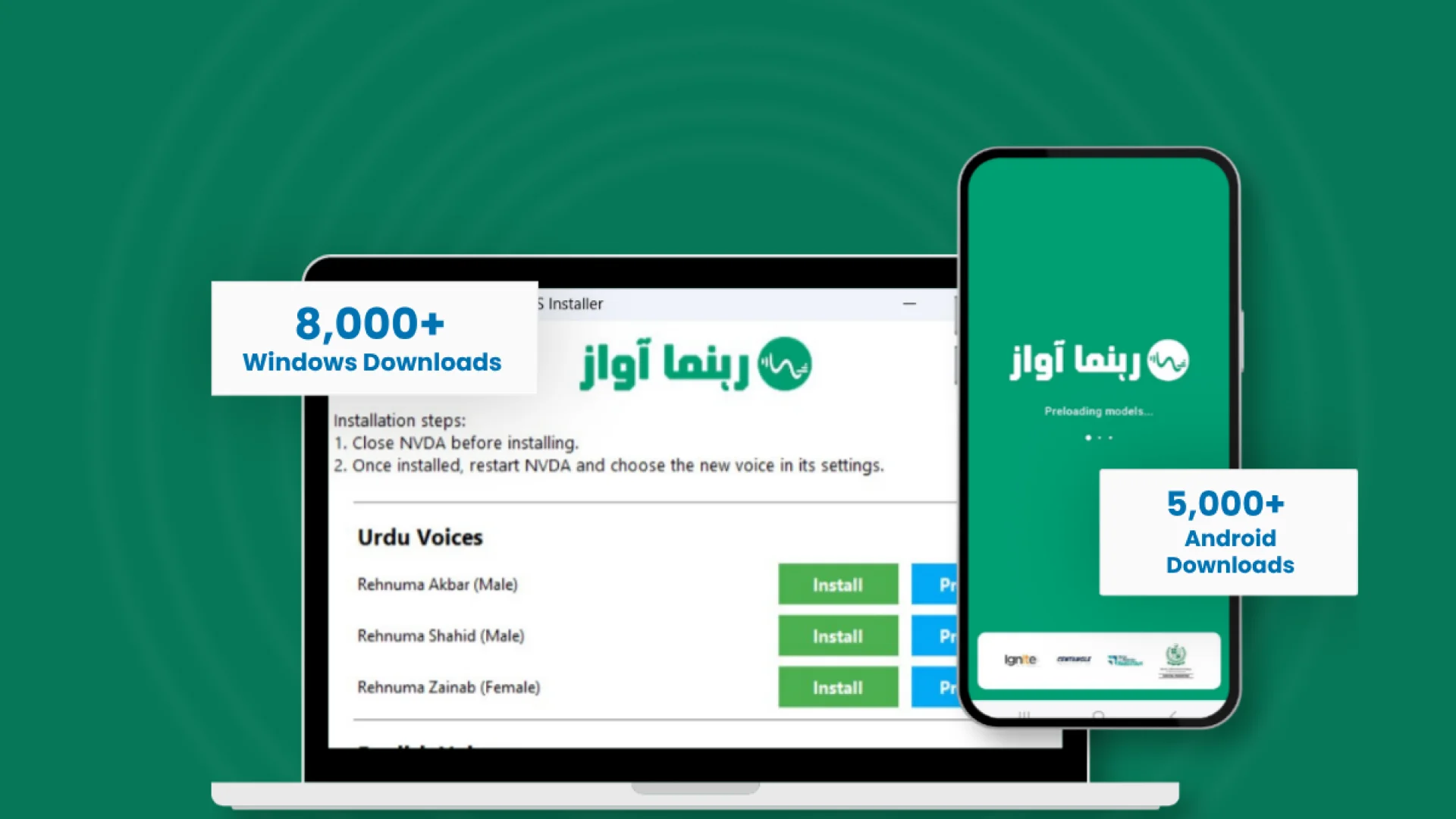
Rehnuma Awaz was built around a clear need: making digital information more accessible for Urdu-speaking visually impaired users.
Accessibility Is More Than Adding a Feature
Accessibility cannot be treated as a final layer added after a system is built.
For visually impaired users, the experience needs to be considered from the beginning. How will users move through information? How will they understand options? How will they receive guidance? How will the system support users who depend on audio, language clarity, or assisted navigation?
Rehnuma Awaz reflects this thinking. It focuses on making digital interaction easier for users who may not be able to rely on traditional screen-based navigation.
Why Urdu Access Matters
Many accessibility tools are built around English-first environments. That creates a gap for users who are more comfortable in Urdu or need information in a familiar local language.
Language is not a small detail. It affects understanding, confidence, and independence.
For a visually impaired user, accessible content in Urdu can make the difference between depending on someone else and being able to access information more independently.
This is where voice and language technology becomes meaningful. It is not about using technology because it is advanced. It is about helping people interact with digital systems in a way that works for them.
Designing Around Real User Needs
Accessibility projects need more than technical development. They need empathy, structure, and practical understanding of how users actually interact with information.
A system for visually impaired users must consider simplicity, clarity, listening flow, navigation, language, and the sequence in which information is delivered.
If the experience is confusing, too fast, too technical, or difficult to follow, the technology loses its purpose.
Rehnuma Awaz shows how digital design can move beyond visual interfaces and support users through a more inclusive experience.
What This Shows About Inclusive Technology
Inclusive technology is not only about reaching more users. It is about designing systems that respect different ways of accessing information.
For organisations, this is an important shift. Accessibility should not be seen as a compliance checkbox or a secondary improvement. It should be part of how digital systems are planned, designed, and delivered.
At Centangle, Rehnuma Awaz reflects a wider belief: digital systems should be useful for the people they are built for, not only technically complete.
When language, accessibility, user behaviour, and technology come together, digital access becomes more practical and more human.
Key Takeaways
- Accessibility Is More Than Adding a Feature
- Why Urdu Access Matters
- Designing Around Real User Needs
- What This Shows About Inclusive Technology
Final Thoughts
Lasting transformation comes from clear goals, honest process design, and technology chosen to support how your teams actually work—not the other way around. If this article resonated, we can help you translate insight into a practical roadmap.