




3min read
Legacy systems are often treated as the first thing an organisation should replace. But an older system is not necessarily a failing one.
Many legacy applications still perform critical business functions reliably. The real challenge may sit around them: disconnected workflows, outdated interfaces, limited access to data or integrations that make change difficult.
Modernisation should therefore begin with a more useful question: what should stay, what should connect, what should improve and what should eventually be retired?
Not Every Legacy System Needs Replacing
If a system remains stable, secure and effective at its core function, replacing it may create more disruption than value. Different parts of the same environment may need different approaches.
Some systems can be retained, others connected to newer platforms, while specific components may need to be replatformed, refactored or replaced. Legacy system integration consulting can help identify which dependencies are actually creating risk or slowing operations, rather than treating the whole environment as one replacement project.
Modernise Around What Still Works
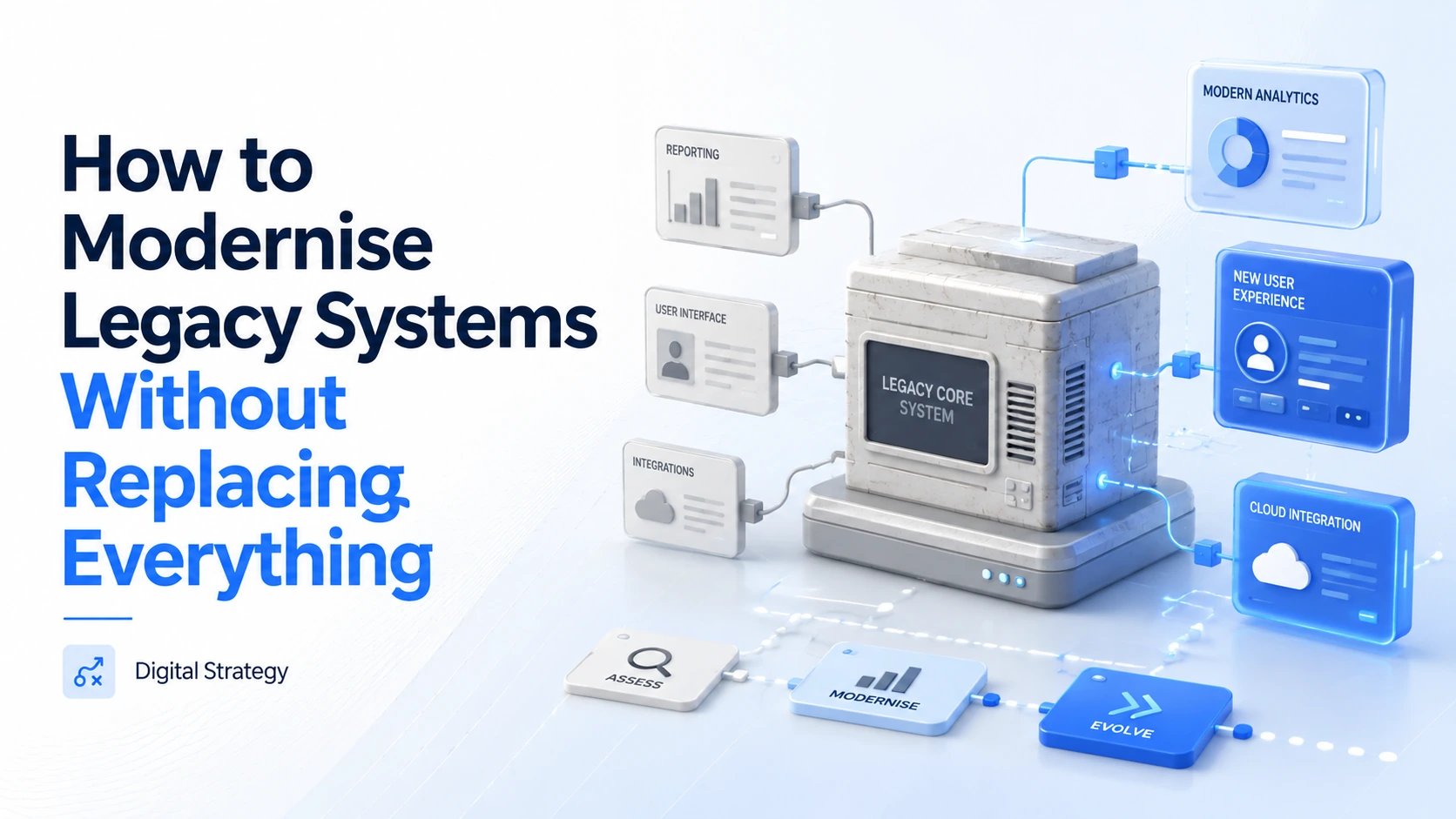
Sometimes the core system is not the problem. The limitation is that newer applications, portals or workflows cannot interact with it easily.
APIs and integration layers can allow modern platforms to use existing data and functionality without rebuilding everything underneath. Systems integration services can improve how information and processes move across the organisation while useful legacy systems continue operating.
This allows organisations to modernise the experience around a system before deciding whether the core itself needs to change.
Move in Phases, Not All at Once
A large system may support several functions such as onboarding, approvals, reporting and billing. Those capabilities do not necessarily need to move together.
An organisation can modernise one area, validate it and then move the next. This phased digital transformation reduces the impact of each change and allows old and new environments to coexist while responsibility gradually shifts.
Applications, data and integrations can also move at different stages. Not every part of the environment has to change at the same time.
Prove the New Path Before Retiring the Old One
Before a critical legacy function is switched off, the new path should be proven. Teams can compare outputs, confirm data consistency, monitor performance and check that connected systems continue working as expected.
Retirement should follow evidence, not optimism.
There will still be cases where replacement is the right decision, particularly when a system relies on unsupported technology, creates significant security or maintenance risk, or prevents important business changes.
The goal is not to preserve everything old or replace everything old. It is to change the parts that are holding the organisation back while protecting the parts that still work.
Modernisation should reduce dependency on legacy systems before it removes them.
If one legacy dependency is creating disproportionate operational risk, discuss it with Centangle.
Key Takeaways
- Not Every Legacy System Needs Replacing
- Modernise Around What Still Works
- Move in Phases, Not All at Once
- Prove the New Path Before Retiring the Old One
Final Thoughts
Lasting transformation comes from clear goals, honest process design, and technology chosen to support how your teams actually work—not the other way around. If this article resonated, we can help you translate insight into a practical roadmap.