




3min read
Spreadsheets are useful when teams are small, processes are simple, and tracking does not need much control. They are easy to start with because a team can create a sheet, add columns, update rows, and share progress quickly.
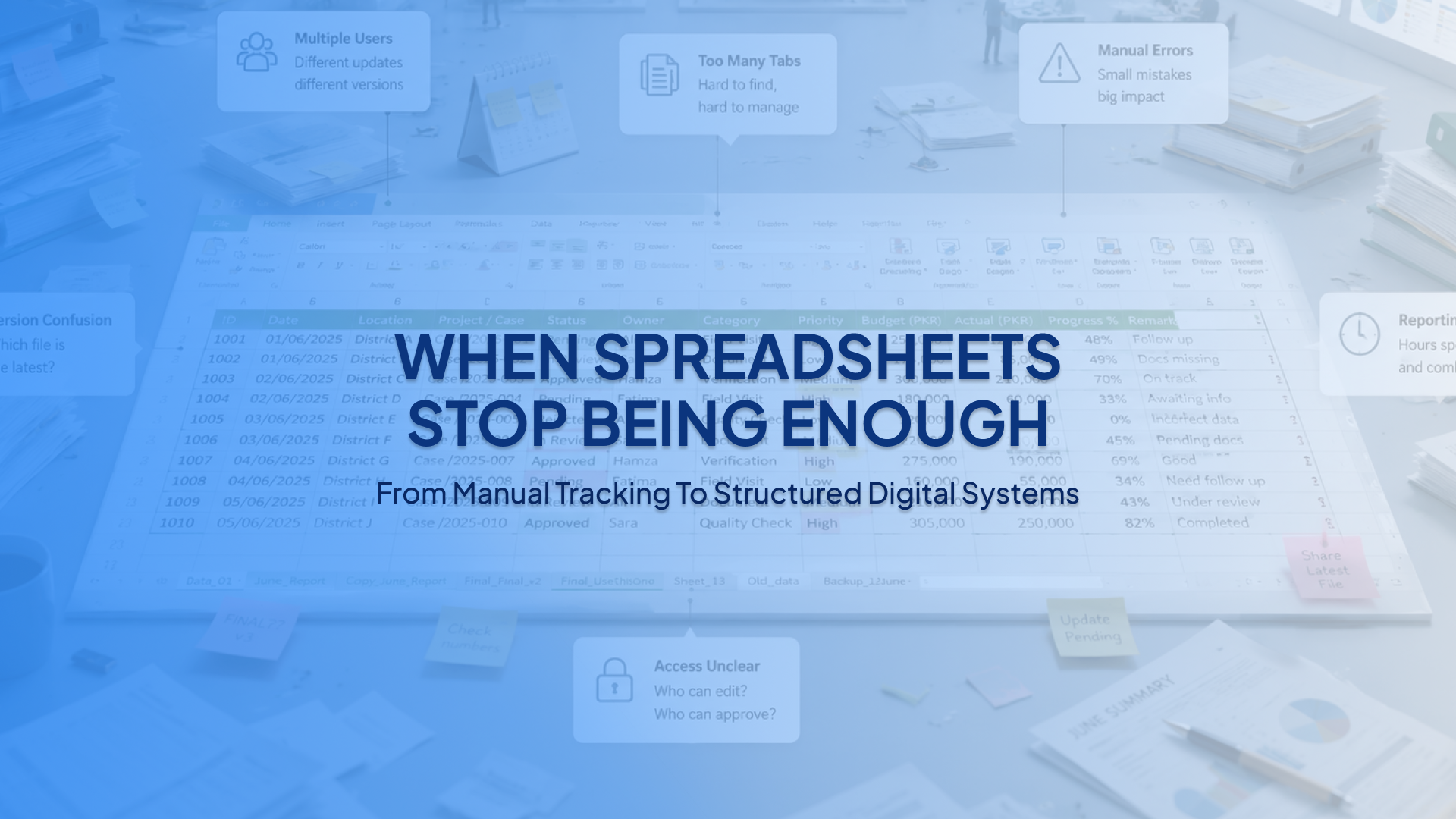
But as operations grow, spreadsheets often start creating the same problems they were meant to solve. The issue is not that spreadsheets are bad. The issue is that they are often used for work that now needs more structure, control, and visibility.
The Process Has Outgrown the Sheet
A spreadsheet can support a simple workflow in the beginning. But when more users, approvals, locations, documents, cases, and reports enter the process, the sheet starts carrying too much weight.
Teams begin adding more tabs, formulas, filters, colour codes, and copied versions. Over time, the process becomes harder to understand and harder to manage. This is usually the point where a proper system becomes necessary.
Version Control Becomes Risky
Spreadsheet work becomes difficult when different versions start moving across teams. One person updates an older file, another makes changes offline, and someone else shares a copy without the latest data.
Soon, no one is fully sure which version is correct. For approvals, applications, financial records, programme data, or operational reporting, this creates real risk. A structured system gives teams clearer control over records, updates, access, and history.
Data Quality Starts to Weaken
Spreadsheets depend heavily on manual accuracy. A user can skip a field, change a formula, enter the wrong format, duplicate a record, or overwrite important information.
These errors may look small at first, but they affect reports, dashboards, decisions, and accountability later. A digital system can add required fields, validation rules, approval steps, user roles, and audit trails so data is protected before it reaches the reporting stage.
Reporting Takes Too Much Time
Many teams spend hours preparing reports from spreadsheets. They clean data, combine files, check formulas, create summaries, and rebuild the same reports again and again.
This turns reporting into a manual task instead of a reliable output of the process. When reporting becomes regular, leadership-facing, or decision-critical, spreadsheets usually stop being enough.
Access and Ownership Become Unclear
Spreadsheets become harder to control when many people need access. Some users should only view data, some should edit, some should approve, and some should only see specific records.
Managing this inside spreadsheets can become messy and risky. A proper system helps define who can view, edit, approve, export, or manage information, so ownership becomes clearer.
Spreadsheets Are Tools, Not Operating Systems
Spreadsheets still have value. They are useful for simple tracking, quick analysis, and early-stage work. But they are not built to manage complex workflows, approvals, documents, dashboards, field updates, case tracking, or system integrations at scale.
At Centangle, we help organisations understand when a spreadsheet-based process needs to become a structured digital system. That could mean a workflow system, MIS platform, dashboard, field operations tool, case management system, or custom software built around the actual process.
The goal is not to remove spreadsheets from every workflow. The goal is to know when they are no longer enough. When spreadsheets start creating delays, confusion, reporting pressure, or control risks, it is time to build something more structured.
Key Takeaways
- The Process Has Outgrown the Sheet
- Version Control Becomes Risky
- Data Quality Starts to Weaken
- Reporting Takes Too Much Time
Final Thoughts
Lasting transformation comes from clear goals, honest process design, and technology chosen to support how your teams actually work—not the other way around. If this article resonated, we can help you translate insight into a practical roadmap.